A Year One retrospective: from a half-formed idea to twelve issues and counting
by Edwin J. Nagle, Founder, Editor & Publisher
A year ago, this magazine did not exist. Not as a website, not as a subscriber list, not as a single printed page. But the truth is it began long before that, not with a trademark or a business plan, but with my brother John.
John gave me my first computer, a Commodore 64 (a bread bin, the old breadbox case), along with a stack of COMPUTE!’s Gazette magazines. Apart from the Programmer’s Reference Manual, that magazine was where I learned what these machines could really do. It fueled my imagination as a kid more than almost anything else. When John passed away in 2022, I pulled that old C64 out of storage. It brought all of it back: the good memories, the sense of possibility, and a whole community of enthusiasts out there still pushing these old machines to their limits.
That feeling has roots that go back even further. I grew up in southern West Virginia, where hardly anyone around me even knew what a computer was. I had my Commodore 64 and no community to share it with, and the nearest club was hours away. But COMPUTE!’s Gazette ran a column called User Group Update, a directory of Commodore clubs around the country, and that’s where I found the Mid-Ohio Valley Commodore Club, three or four hours north of me. As a ten- or eleven-year-old, I wrote them a letter: I’d love to be part of this, but there’s no way I can get to a meeting. They did something small and generous that I never forgot. They added me to their mailing list, and once a month a newsletter showed up in my mailbox. For a kid with no one nearby who spoke the language, that monthly envelope was a lifeline, and the magazine itself is what put it in reach. Decades later, that’s exactly the feeling I’d find myself wanting to recreate.
What started as grief turned into a project. At first I wasn’t thinking about a magazine at all, just a simple newsletter, something small to share with the retro community I was falling back in love with, the way that club had once shared one with me. That was the whole idea: mailbox candy, once a month. But the more I worked on it, the more one question nagged at me: whatever happened to COMPUTE!’s Gazette? That question is what sent me down the long road of figuring out who actually owned the brand, and whether it could be brought back for real. Call it scope expansion: the newsletter quietly became a magazine.
The newsletter needed a way to exist in print. The answer turned up, of all places, in a thrift store. My son Austin and I used to go scouting for retro finds together. He hunted vintage audio equipment; I went straight for anything retrocomputing. One of those trips, I came across a gigantic old HP LaserJet 5550 and figured I could use it to print the newsletter. Austin took one look at this enormous hunk of mechanical, computerized printer and thought it was incredible. He was on board with the whole idea instantly. My oldest son Alex came by with his truck, and the three of us wrestled that thing into the bed of it, much to my wife Marlena’s chagrin. She knew exactly what it meant: one more of mine and Austin’s “projects” added to a house already decorated with them.
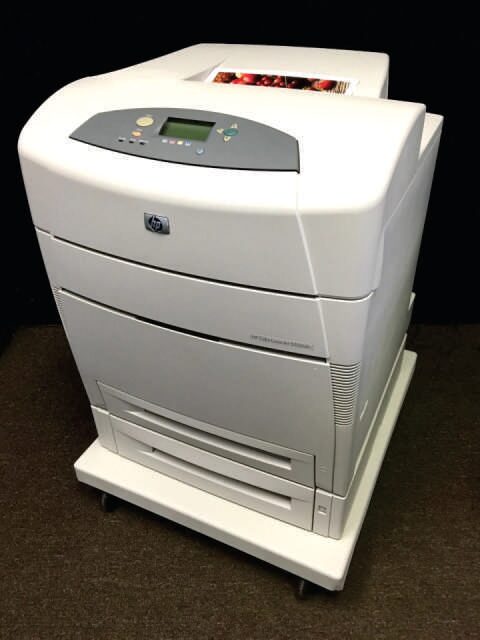
That printer, that truck, that eye-roll from Marlena: that’s where COMPUTE!’s Gazette really started. Twelve issues later, I’m writing this looking at a stack of them on my desk. So before we dive into the July issue, I want to take you back to the beginning, and tell you honestly how we got here, the good, the hard, and the parts I never could have planned for.
It started before there was anything to start
Once that question, whatever happened to COMPUTE!’s Gazette?, took hold, I started doing the unglamorous work: tracing corporate history, reading old acquisition records, and trying to understand exactly what had happened to this brand across thirty years of mergers, sales, and bankruptcies.
The deeper I dug, the more I appreciated that the name itself had a richer story than most people realize. “Gazette” didn’t start as a Commodore word at all. It traces back to 1978 and the PET Gazette, a newsletter for Commodore PET users started by Len Lindsay, which in Fall 1979 was acquired by Small System Services and renamed COMPUTE!. Even then, the mission was never single-machine: in that first issue, Lindsay wrote that the emphasis on the PET would remain, but other 6502 systems would be covered too, including the new and not-yet-released Atari. From the very beginning, “Gazette” meant a community bulletin, not a brand chained to one computer.
As COMPUTE! grew through the early 1980s, “Gazette” worked as a recurring sectional label, a masthead device the magazine applied across platforms as it expanded to cover Apple, Atari, and the PC. It was a format, not anyone’s exclusive property. And the Commodore-specific spin-off that arrived in 1983 nearly carried a different name entirely. Tom Halfhill, who joined the original COMPUTE! in 1982 and lived through it, told me the working title was “Commodore Gazette,” until an executive at Commodore caught wind of it and the company’s lawyers objected. The compromise was to call it COMPUTE!’s Gazette, with “Commodore” set in smaller type below. In other words, the name we all came to know was itself a fallback, a throwback to the old PET Gazette roots rather than a banner Commodore ever owned.
Now, I know how most of us actually remember it. For its entire original print life, COMPUTE!’s Gazette was the Commodore book, the C64 and 128 bible, the magazine on the desk next to the 1541. That association is real, it’s earned, and I share it. I grew up a Commodore kid myself, and I understand completely why some longtime readers bristled when the revived magazine started putting a Tandy or an Atari on the cover. I’m not asking anyone to pretend otherwise. But the fuller history is that the name came before that single association and was never meant to be chained to one machine. One computer never owned the word; it always traveled with the publication. So when I brought the Gazette back to cover the whole retro spectrum, I wasn’t betraying what it had been. I was returning it to what it always was underneath: a community bulletin for people who love these machines, whichever ones they happen to love.
The original COMPUTE!’s Gazette spin-off served Commodore users from 1983 until its print run wound down around 1990, with the broader COMPUTE! brand continuing into the mid-1990s. What happened to the rights after that took a lot of investigation to piece together, and the answer turned out to be stranger than I expected. The COMPUTE! trademark and copyrights had eventually been sold off to be liquidated, bought by a competing magazine essentially to be shut down. Somewhere in there, the trademark and copyrights were put up as collateral for a loan. The loan went bad, so the bank ended up holding them. Then the company that had borrowed against them went out of business, and ownership reverted to an original entity that itself no longer existed. In practical terms, that left the whole thing in limbo. Nobody clearly owned it anymore. So I set out to change that.
The Legal Groundwork
Reviving a brand isn’t as simple as deciding to. Year One’s invisible foundation was the rights work.
- Trademark — Filed May 31, 2024, securing ownership of the COMPUTE! mark itself: the right to publish under the name going forward.
- Copyright Recordation — A Certificate of Recordation issued by the U.S. Copyright Office (Volume 15043, Doc. No. 283, recorded March 2026) covering the historical archive, built on a chain of legacy chain-of-title documents.
- Archive Preservation — The original 1979–1996 run isn’t just nostalgia. It’s a record of early home computing that deserves protected stewardship.
The very first outward move, though, wasn’t legal at all. It was a message. On April 23, 2024, more than a month before I’d even filed for the trademark, and well over a year before the first issue would exist, I reached out to David Murray, the 8-Bit Guy, to thank him for some Commodore 16/Plus/4 material he’d shared with me personally, and to float something far less certain: I was building a real print magazine, hoping for a July 2024 launch, and looking for contributors. Would he write something? Maybe on the Commander X16? An interview, even?
His answer was a polite, well-earned no. He gets asked about projects like this constantly, he explained, and nearly all of them evaporate before anything ships, so he’d long since stopped spending time on them. I understood completely. But I also wasn’t quite ready to take the no. I asked whether I could come back to him once I could actually demonstrate this thing was real, or whether it was a hard no. By that afternoon, the door had cracked: if I sent him some questions by email, he’d answer them when he had time.
That small exchange has stuck with me, because it captured the whole problem in miniature. Everyone in this community has watched revival projects fizzle. The only counter-argument I had in April 2024 was conviction, this is definitely happening, and no evidence yet to back it. The entire first year, in a sense, was the work of turning that claim into something you could hold.
Not every door took convincing, though. As the relaunch took shape, I reached out to Peri Fractic, of the Retro Recipes YouTube channel, to ask whether he might be interested in covering it. His reply, in April 2025, was exactly the kind of encouragement you hope for and rarely expect. He thought the magazine coming back was genuinely cool, and, having been editor of ZZAP! 64 himself until recently, he knew firsthand just how much work I was signing up for. He asked the right, grounded questions: print or digital, how far along issue one was, and when it would actually publish. And he closed by hinting that he had something we might collaborate on that could be rather wonderful, pending timing. I had no idea then what that hint would grow into. In the moment, it was simply the feeling of a respected voice in the scene taking the project seriously, which, after a year of mostly talking myself into it, meant a great deal.
July 2025: We hit RUN
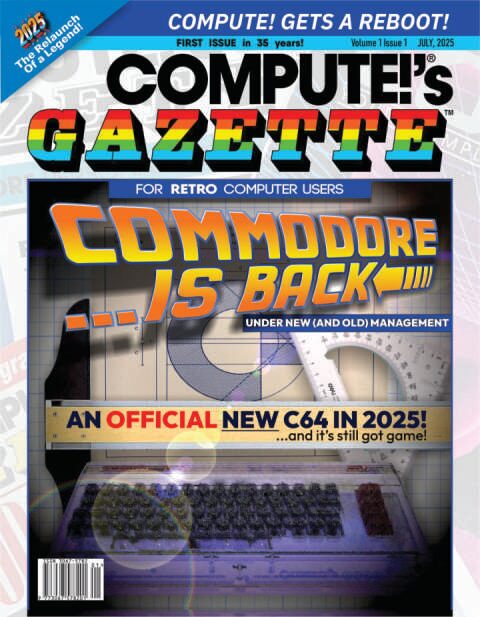
The first issue had originally been aimed at May 2025. It slipped to July, partly the ordinary reality of a first issue taking longer than you think, and partly because of a conversation I couldn’t yet talk about publicly. By spring, the project had gone from a private conviction to actual news: I sat down with Randy Kindig for the Floppy Days podcast to announce the revival, and for the first time the plan existed out loud, in front of an audience, with a date attached.
The relaunch issue went out in July 2025. I’d be lying if I said I knew whether anyone would care. The bet was specific: that there were still enough people who missed type-in programs, hands-on utility content, and a community that lived in print, and that they’d pay for a real magazine, full color, saddle-stitched, arriving in their mailbox every month.
They did. Slowly at first, then steadily.
What surprised me most wasn’t that subscribers came. It was who came. Not only the original readers from the ’80s, but younger enthusiasts who’d never seen an issue when it was new, drawn in through the modern retro scene, the Commander X16 and MEGA65 communities, FujiNet, and the festival circuit.
One message meant more to me than almost any subscription. Tom Halfhill, an editor on the original COMPUTE!, reached out after seeing the revival. I sent him a stack of the new issues and, a little starstruck, asked if he’d sign one for me and pass the others along to founder Robert Lock and the other alumni. He was generous about the whole thing, and what he said has stayed with me: that I was doing a great job, especially with such a small staff, basically just me. Coming from the person who helped make the magazine I grew up on, that landed about as deeply as anything could. Tom also pointed out an irony I hadn’t fully appreciated. Back in 1983, it was a Commodore executive’s lawyers who forced his team away from the “Commodore Gazette” name. Forty years later, here I was reviving the magazine in close partnership with a new Commodore. As Tom put it, almost a reversal.
Building the thing while flying it
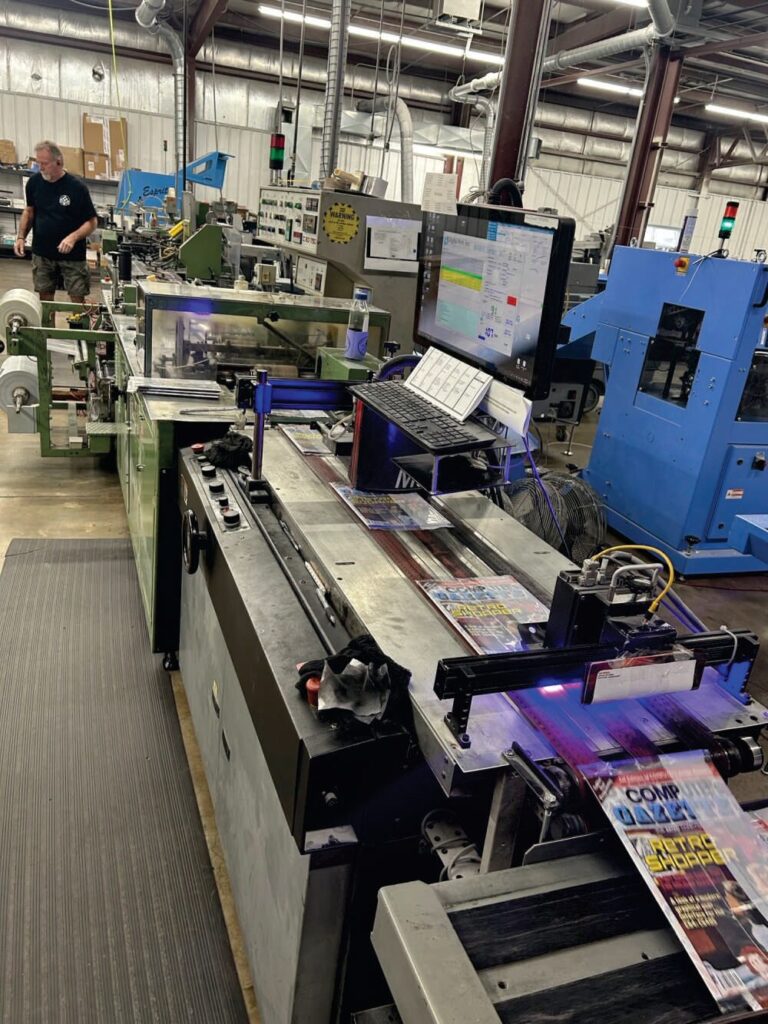
People imagine a magazine has a staff. This one, on the operations side, is essentially one person, me, at a desk in central Texas, supported by an extraordinary network of contributors who care about this material as much as I do.
What does a single month actually take? Editorial planning and commissioning. Chasing and editing 30-plus contributors across a dozen platforms. Layout, all of it, by me, in CorelDraw, a program I’ve used since the DOS days, running on an old Dell laptop that’s plenty powerful for the job even if it can’t always digest a hundred pages without complaint. Type-in programs verified with the Automatic Proofreader and our updated MLX, because keying in a program by hand is the most COMPUTE!’s Gazette thing there is. Cover art. Coordination with the printer. And then the part nobody romanticizes: subscriptions, payments, shipping, and the steady stream of support requests. Every month, all of it, on a deadline that does not move.
That deadline has a specific shape. Subscriptions roll over on the 8th of each month (the cutoff that determines which issue a new subscriber receives), and the same date fires the starting gun on the next issue’s production. So from the moment one issue is locked, the clock gives me under thirty days to do the whole thing again: source and commission content, write, lay out, proofread, prepress, build the digital edition, and hand off for print production. There is no slack month, no catch-up week. The cycle simply resets and starts running, twelve times a year.
That reality produced some genuinely hard stretches. There was the payment-processing glitch that quietly stranded dozens of paying subscribers, orders that looked fine on their end but never fully went through on mine. Fixing it meant reactivating and reshipping across several waves of cleanup, customer by customer. There was a migration between platforms, the subscriber reconciliation that followed, and a software conflict that caused a batch of orders to fail right when I least needed it.
Some lessons I only learned by getting them wrong. Our very first issue shipped the old-school way: no bag, mailing label printed right on the cover. Readers let me know, kindly but clearly, that they wanted to keep these, to put them on a shelf and not have a sticker scarred across the artwork. We bag every issue now. It costs a little more. It’s worth it.
The honest math underneath all of it: print is expensive, paper and postage eat most of every issue, and the margins are tiny. Our costs have climbed steadily since launch, and yet we’ve held the subscription price exactly where it started, because this was never about the money. We’re not chasing profit. The goal was always sustainability, a magazine that can stand on its own and come back every single month. That means every subscriber and every contributor matters enormously, and I mean that literally, not as a nicety.
None of this is glamorous. None of it shows up on a cover. But it’s the actual texture of reviving a magazine in the modern era: half editorial, half plumbing. I tell you this not to complain (I love it) but because the issues that follow each cost a month like that, and I want you to feel the weight behind the stack on my desk.
Year One, month by month
Twelve issues, twelve covers, and a different corner of the retro world in each one. Some months I planned carefully; others were dictated by who passed away, what shipped for Christmas, or what my software did to me five days before a deadline. Here’s the year as it actually unfolded.
August 2025 · Issue 2: Robert Tinney
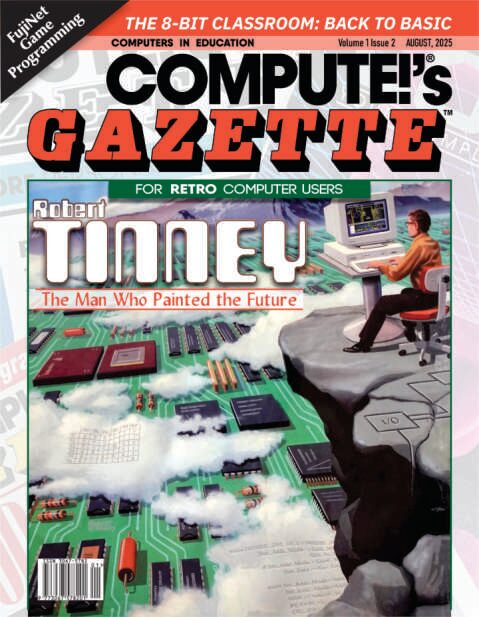
For the second issue I’d hoped to commission a new cover from Robert Tinney, whose artwork for Byte magazine I’d admired since I was a kid. Those covers had stuck with me for decades. I emailed to ask. His stepson, Stephen Hansen, wrote back: Robert would ordinarily have loved a project like this, but his health no longer allowed it. He might, though, be up for an interview. I was thrilled at the chance just to speak with him, and deeply honored to feature him and his work, understanding, even then, that this would very likely be the last interview anyone would get. Robert passed away in February 2026. One thing he told me has stayed with me: he’d deliberately kept himself from understanding too much about the technology, because he wanted to be able to translate what it was for everyone else looking at it from the outside.
September 2025 · Issue 3: Tandy on the cover
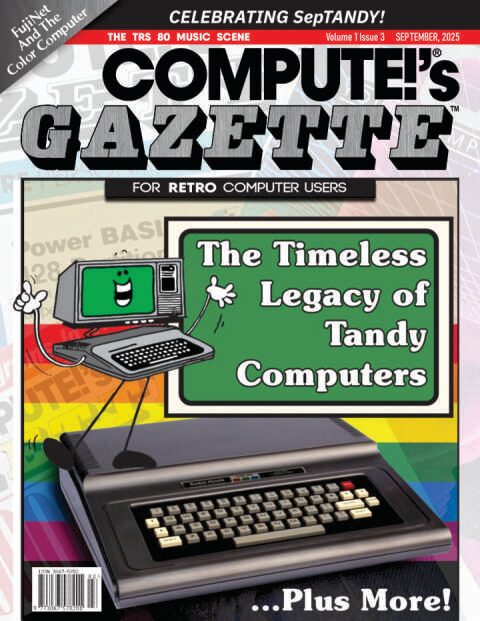
We put a Tandy on the cover, to the predictable grumbling of a few Commodore loyalists. What’s a Tandy doing here? But that was exactly the point. Tandy is a hugely important piece of retrocomputing history and one of the most underserved in coverage, and getting to know the spirited Tandy community, contributors doing genuinely great things with those machines, was one of the real pleasures of the month. Acknowledging them, and helping change that neglect, is precisely the kind of thing the wider-scope Gazette exists to do. This was also the issue that nearly killed me. I lay out the whole magazine in CorelDraw, and about 95% of the way through, five days from release, an autosave corrupted both the working file and its backup. I rebuilt the entire issue in a week from low-quality proofs. Half editorial, half plumbing, and sometimes half disaster recovery.
October 2025 · Issue 4: the Dodleston Messages
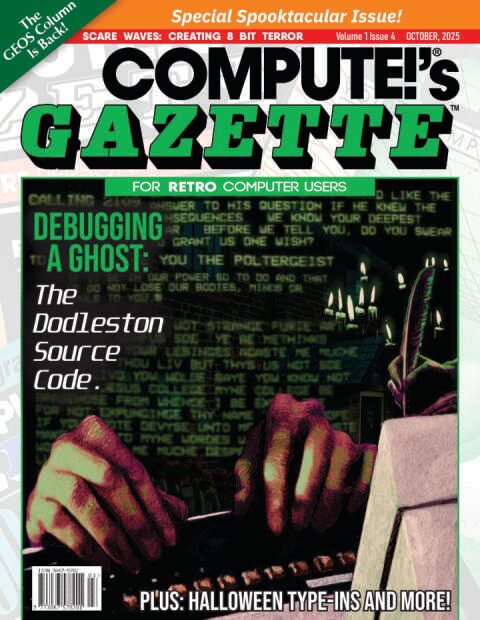
This was an insanely fun issue to build. I’d known about the Dodleston Messages for years and had always been fascinated by the story. In 1984, in the village of Dodleston in Cheshire, England, a teacher named Ken Webster began receiving impossible text messages on his BBC Micro, apparently from a 16th-century man named Lukas Wainman and, stranger still, from an entity claiming to write from the year 2109. When the spooky month rolled around, I knew immediately this was the story for October. I was honored to speak with Gary Rowe, a ufologist and paranormal investigator who looked into the case firsthand back in the 1980s and even built his own empirical test equipment (sensors, a tape recorder, a video camera) driven by a Tandy TRS-80. A Tandy at the heart of a paranormal investigation, one month after our Tandy cover; you can’t plan that. Take the story for what it’s worth, but it’s a genuinely great read either way.
November 2025 · Issue 5: Retro Shopper
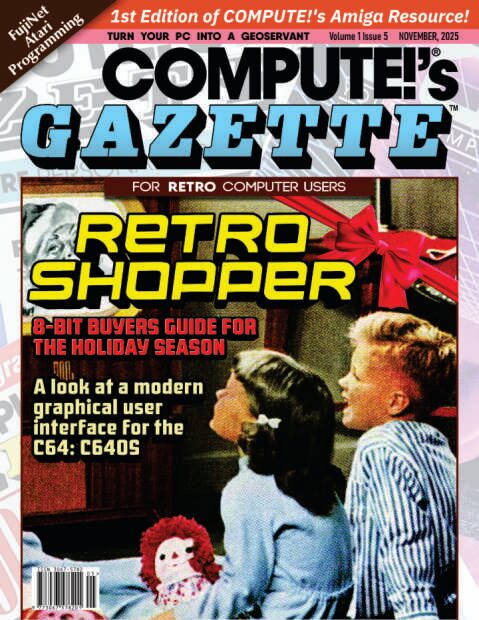
For November I tried something seasonal: “Retro Shopper,” an 8-bit answer to the old Computer Shopper, the idea being you could hand it to your spouse with everything you wanted circled before Christmas. I managed to leave a few businesses out, which I heard about, so if you run a retro business and want into the next one, this is your standing invitation.
December 2025 · Issue 6: Rebecca Heineman
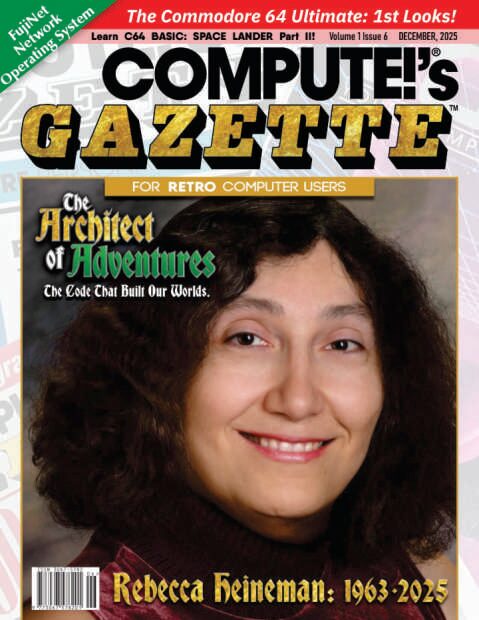
This was the month that tested what kind of magazine we want to be. We’d committed to a cover feature honoring Rebecca Heineman, the legendary developer behind The Bard’s Tale III and so much more, who had passed away. It was a piece several of us on the team built together, and one that mattered deeply to many contributors, myself included. Then Commodore shipped the Commodore 64 Ultimate and sent us a review unit. Ordinarily, news like that takes the cover without a second thought. But we’d made a commitment, and Rebecca’s tribute meant more than a product launch. We ran the Ultimate review in the issue; it just took a back seat to Rebecca, who earned the cover. I stand by that call completely.
January 2026 · Issue 7: The C64 Ultimate
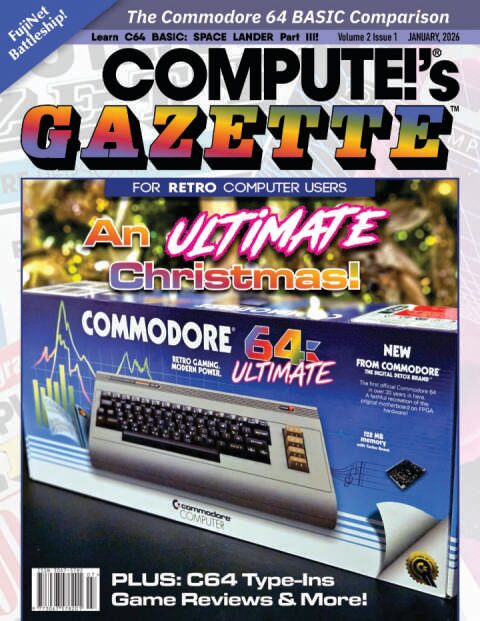
After December’s first look, January gave the Ultimate the fuller treatment, a review-and-reaction issue pulling together community feedback now that the hardware was in people’s hands. My favorite part: photos from actual kids who’d unwrapped a C64 Ultimate on Christmas morning. It’s a good reminder that this isn’t only nostalgia for those of us who were there the first time.
February 2026 · Issue 8: A bridge to the future
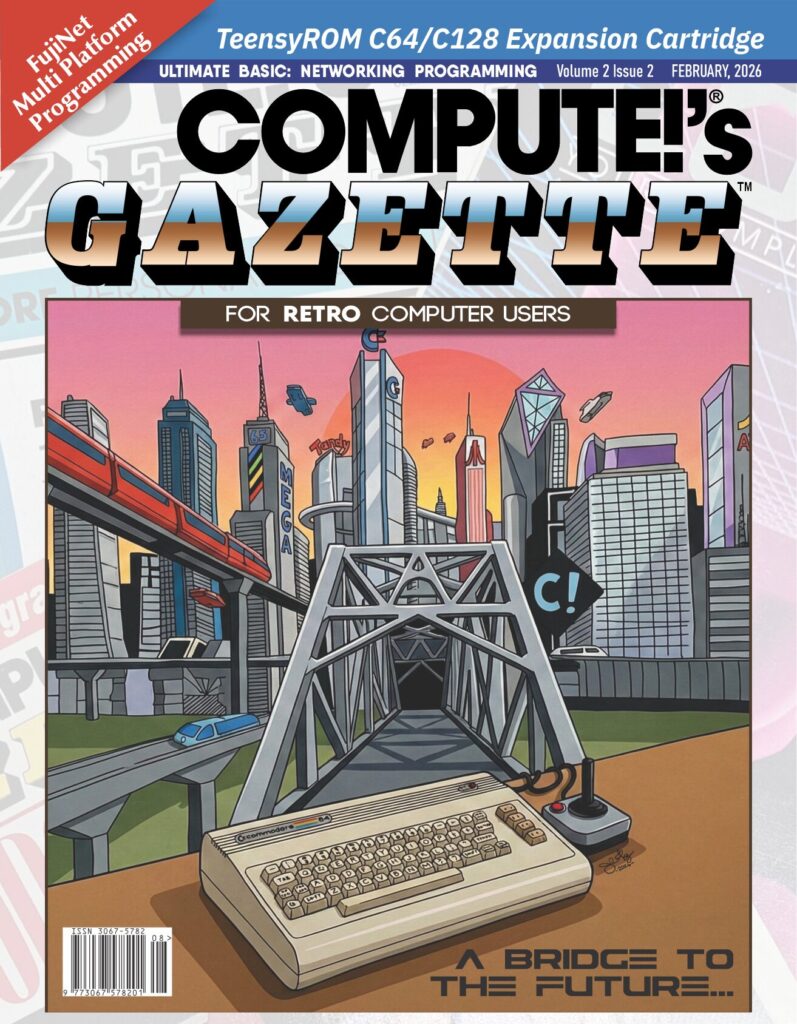
February was our inspirational issue. The idea was to sit in the space where retro and futuristic overlap, to show how something old can still feel forward-looking, and how the new projects people are building today extend this hobby into the future rather than just preserving its past. Commodore and others served as the throughline, but the real subject was momentum: where all of this is headed, and why the best of it is still ahead.
March 2026 · Issue 9: Anarchy in the UK
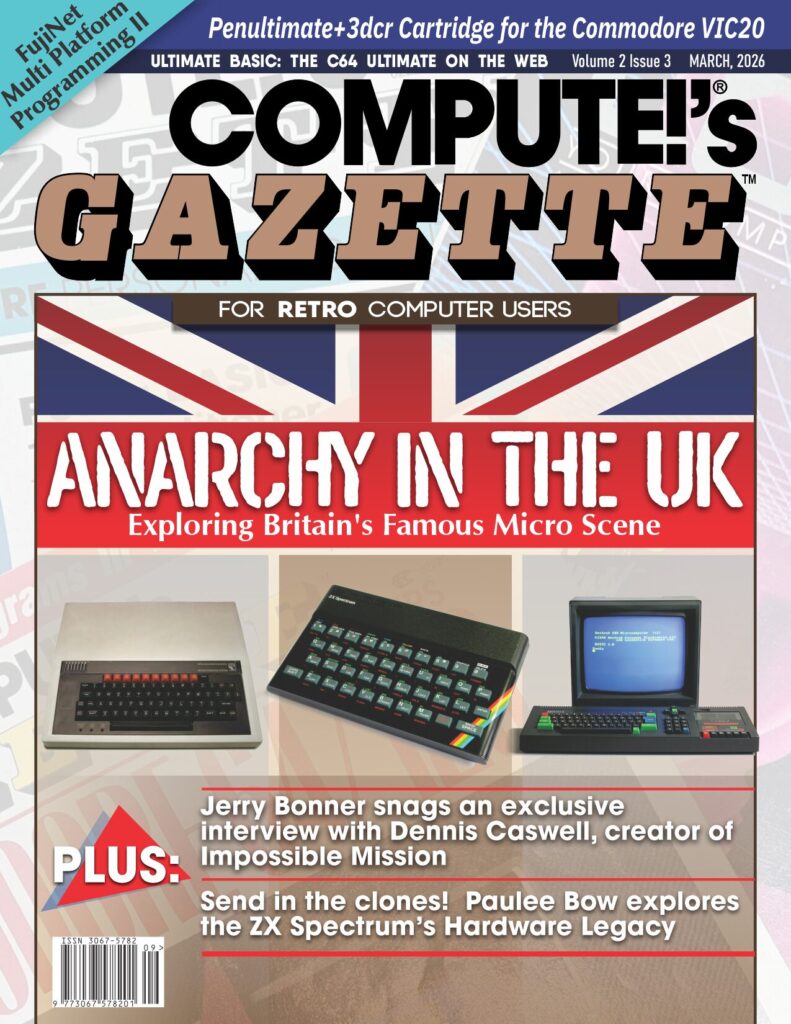
March turned to the UK scene. Even though the magazine is solidly USA-based, several of our contributing writers grew up with 8-bit micros on the other side of the Atlantic, and this issue was theirs: a look at how the same machines were lived with completely differently over there, and a spotlight on the quirky computers that only ever existed in the UK. The British retro world is the same as ours and yet different in a hundred small ways, and letting the people who were actually there tell it made all the difference.
April 2026 · Issue 10: BASIC is not dead
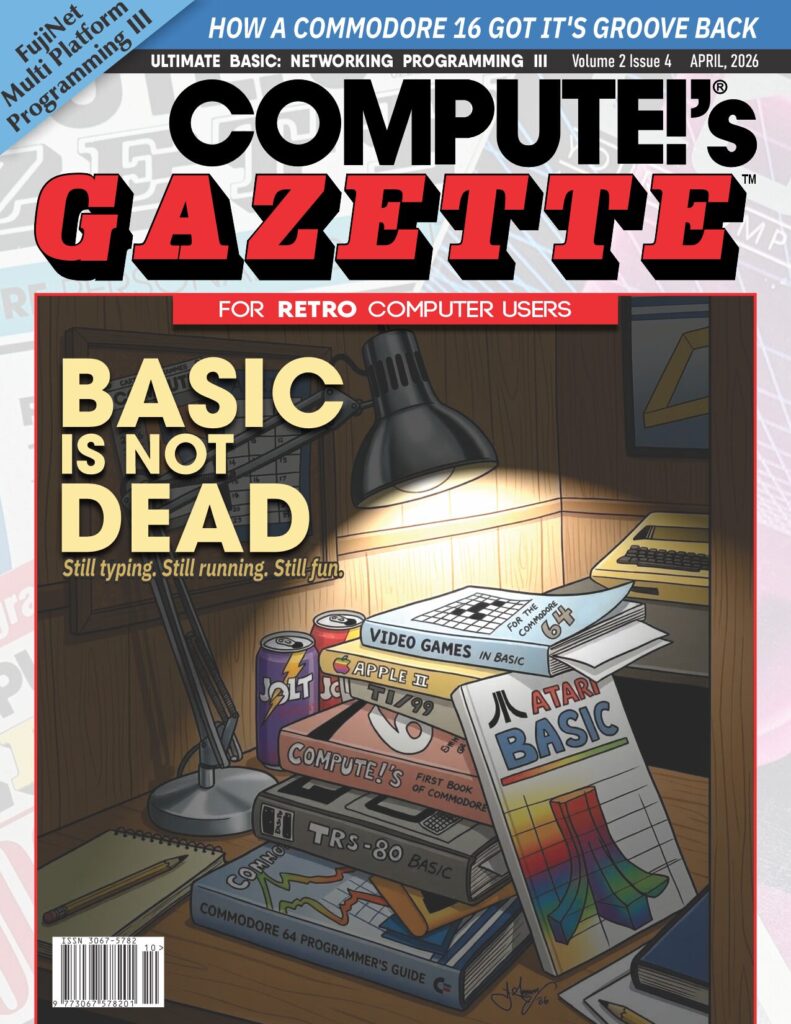
The planned feature for April made a case I believe in: BASIC is not dead. It ties directly to the single most requested thing in the magazine, type-in programs, because typing in BASIC is still how a lot of people first learn that they can make the machine do something, not just use it.
But April is also the issue that carried Austin’s In Memoriam. He passed away in late March, and producing this issue at all took everything I had and then some. I was in no shape to create much of anything. The only reason the magazine didn’t miss a month is that a good portion of April’s content and planning had already been done weeks in advance. I’d always treated planning ahead as basic discipline; I never imagined it would be the thing that held the magazine together when I couldn’t. It did. More on Austin below.
May 2026 · Issue 11: Predictions, revisited
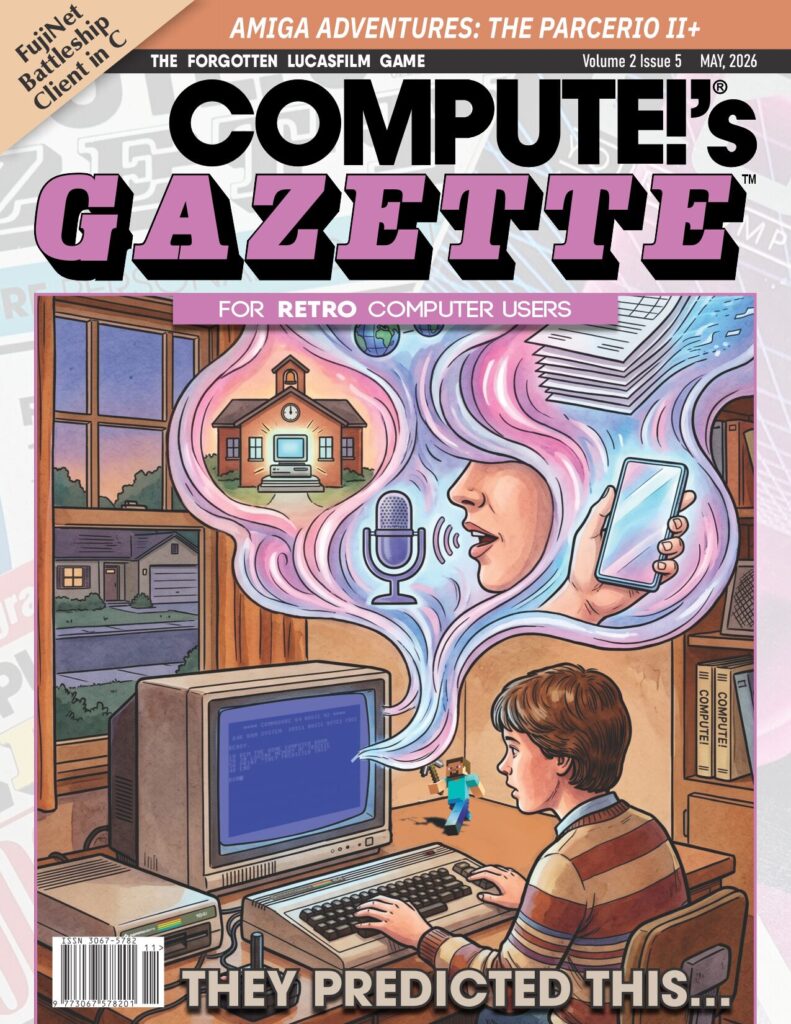
For May we dug up the predictions the original COMPUTE! and Gazette staff made decades ago and checked them against reality. Surprisingly, most of them came true in one form or another. It’s a strange and fun thing to read what they imagined the future would be, knowing how it actually turned out.
June 2026 · Issue 12: Bil Herd and the C128 at 40
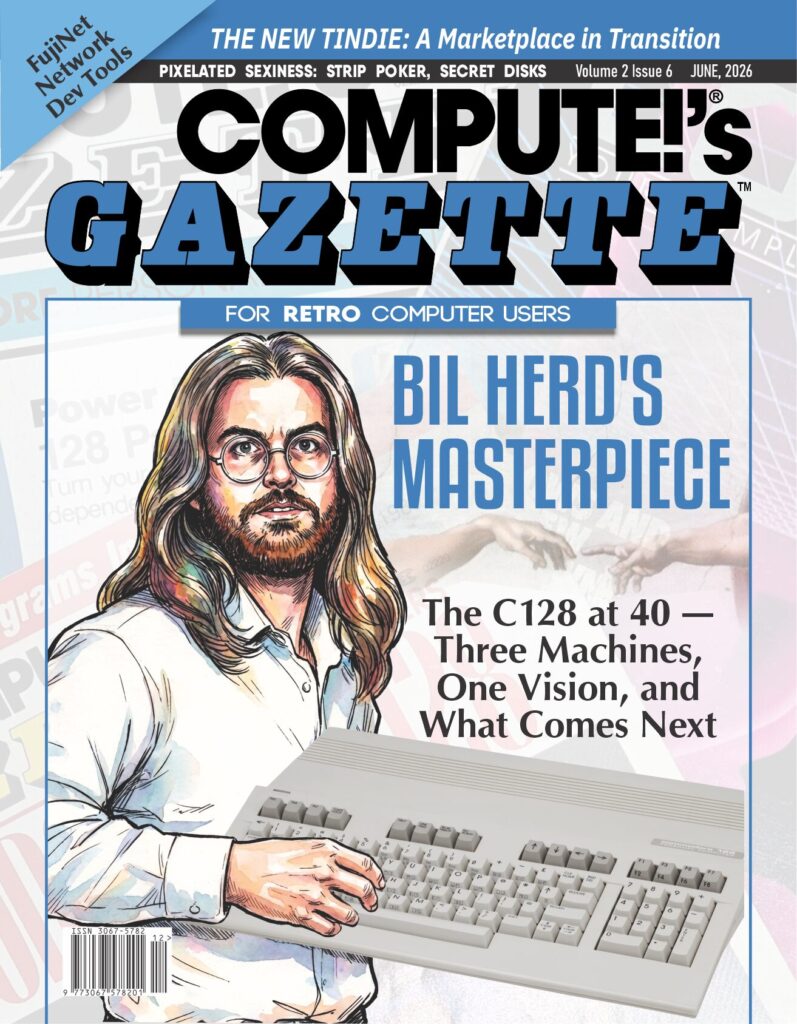
What a way to close out our first twelve issues. Growing up with my Commodore 64, I used to daydream over the Lyco Computer ads in the back of COMPUTE!’s Gazette, imagining what it would be like to own one of those Commodore 128s. And here, forty years on, was my chance to talk with the engineer who made it possible. Bil Herd graciously agreed to an interview, and I was determined to ask the things other outlets hadn’t already covered. We talked about the C128 at 40 (“three machines, one vision, and what comes next”) and put the question of a possible new C128 remaster to him as well, after raising it with Peri Fractic. Some of Bil’s answers may surprise you. I won’t pretend to be neutral about it: getting to sit down with the giants who built these machines is genuinely thrilling, and I don’t take a single one of these opportunities for granted.
Austin
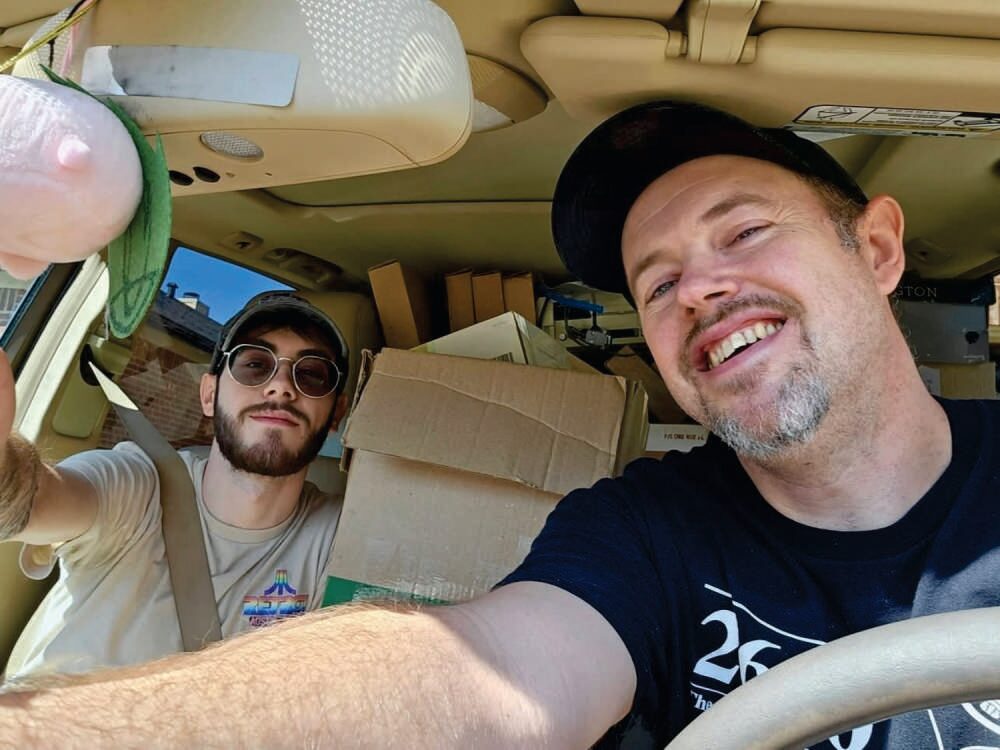
I can’t write an honest account of this year without coming back to him.
Austin was there at the very start, in that thrift store, grinning at a ridiculous printer, ready to help haul it home. He believed in the project before there was a project. As things grew, we’d planned a retail store, RETRO! at Lakeline Mall, and it was going to be his store to run. Austin passed away in March 2026, in a motorcycle accident. The store won’t be opening; without him, there was no reason to.
Austin and I worked on all kinds of projects together: cars and dirt bikes, drones, RC cars, electronics. He was a maker through and through, and he understood, the way few people really do, what it means to make something old new again. He was also a true audiophile; one of his many passions was building speakers and designing audio systems. One of his last projects was a set of retro-inspired computer speakers, complete with analog dB meters and connections for various retro platforms. A beautiful and functional work of art, because both matter. It sits unfinished on the workbench in his room. Maybe I’ll finish it one day. Or maybe it stays as it is, a symbol of his life, an unfinished, beautiful work of art that had so much potential.
His memory is in these pages anyway. It’s in the Gorillas port we dedicated to him, and it’s in the simple fact that I kept going. There’s a symmetry to this magazine I never asked for: it began with the gift of a brother I lost, and it grew alongside a son I lost. Two people who handed me something, a stack of magazines, a hand on the other end of a printer, and trusted me to do something with it. Grief and work have been braided together in the back half of this year in a way I’m still learning to carry. I mention it not for sympathy, but because this magazine has never pretended to be made by a faceless company. It’s made by people. And some of the people it was made with are gone.
What Year Two looks like
The plan from here is more of what’s working and a few things I’ve been quietly building toward. The big one is the disk-only era. The final fourteen issues of the original COMPUTE!’s Gazette, published between January 1994 and February 1995, were released exclusively on Commodore 1541-formatted floppy disks, replacing paper entirely before the magazine’s initial cancellation. They were never printed at all. I want to bring those into print for the first time: the original content under the period-correct masthead, with reconstructed, era-appropriate advertisements, so they look like the issues that would have existed had they made it to paper. There’s a crowdfunding campaign in the works for it. Beyond that, more engineer history while we still can capture it, select value-added reprints from the full 1979–1996 catalog where it genuinely adds something, and continued partnership with archive.org and the community archivists who kept this material alive long before I came along. I have no interest in gatekeeping the old work. As far as I’m concerned it’s free and open; owning the rights just means no one can lock it away.
And I think about the next generation more than people might expect. Programming a Commodore 64 won’t land anyone a job in 2026. But the spark of typing something in and seeing the machine respond immediately, with no twenty browser tabs and no algorithm deciding what you see next, is something kids genuinely don’t get anywhere else. One focus, one job to do. That’s worth handing down. It’s also why we still run a user-group directory in the magazine, and why I want to get issues into clubs and maybe libraries, because somewhere there’s another kid who’s the only person in town who cares about this stuff, and a column in a magazine might be the thing that finds them. It found me.
The truth is, the magazine already does that better than I planned. I had a kid walk past our booth at a show, spot a tiny Minecraft Easter egg I’d hidden in a recent issue, and light up with recognition. He couldn’t have known that the little character was there for Austin. Minecraft was a huge part of his story, and from here on I plan to tuck some small token of remembrance for him into every issue, sometimes in plain sight, sometimes hidden, always in spirit. A reader wrote in, separately, about typing in a game as a child, only to come home from school and find his mom had finished keying in the rest of it for him. That’s the whole thing, right there: memories, and the making of new ones.
Mostly, though, the goal is simple and it hasn’t changed since before any of this was real: keep the magazine alive, keep it honest, and keep it useful. Mailbox candy, once a month, for a community that’s bigger than any one machine.
Thank you for reading Year One. Let’s go load Year Two.